When Leaders Ignore Feedback, Organizations Pay the Price
Sometimes leaders ignore the very signals that could create meaningful and positive change in their organizations.
The irony is that the feedback leaders need most often comes directly from the people closest to the work — their employees.
But when that feedback is ignored, dismissed, or minimized, Employees slowly stop speaking up.
Not because they have nothing to say, but because they believe no one is listening.
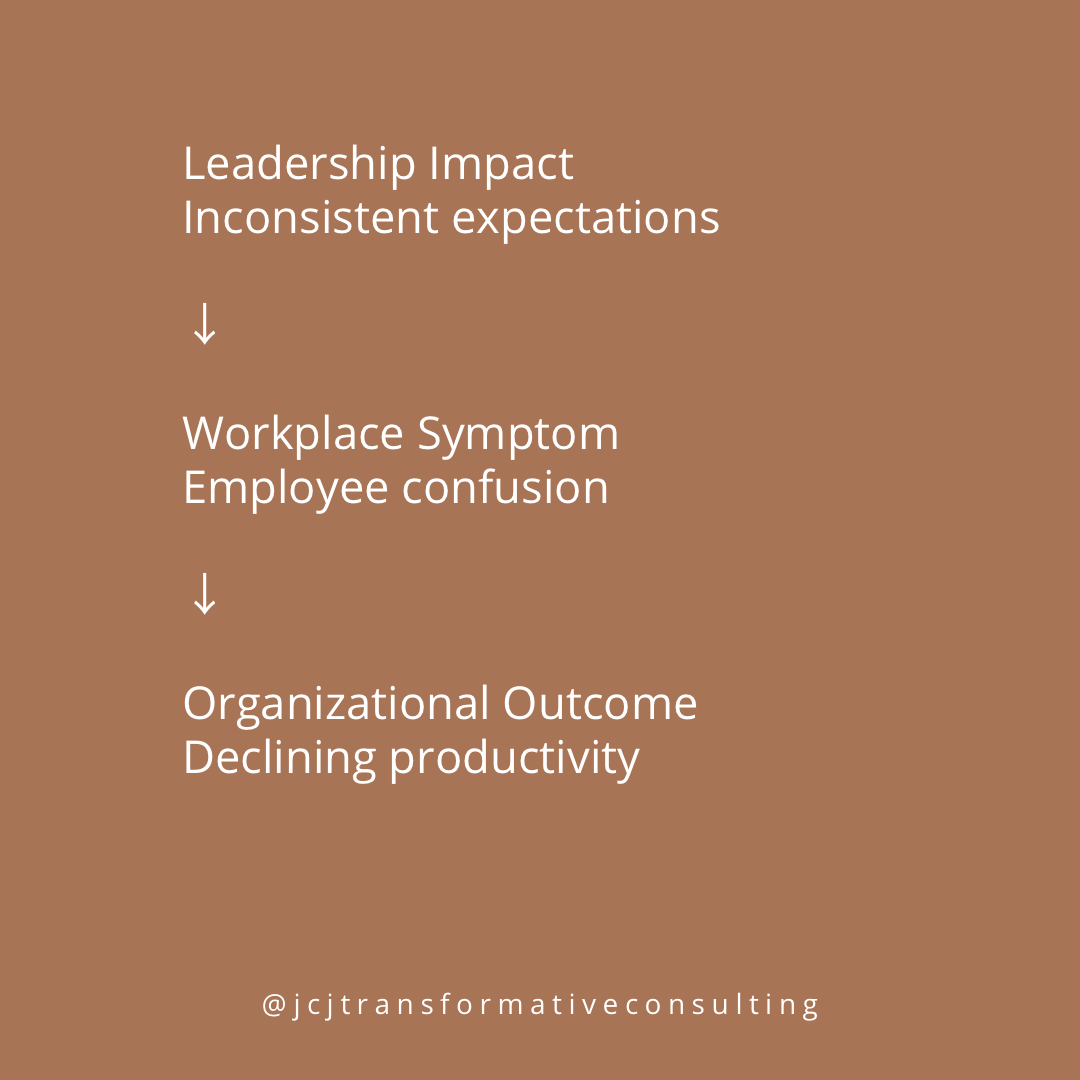
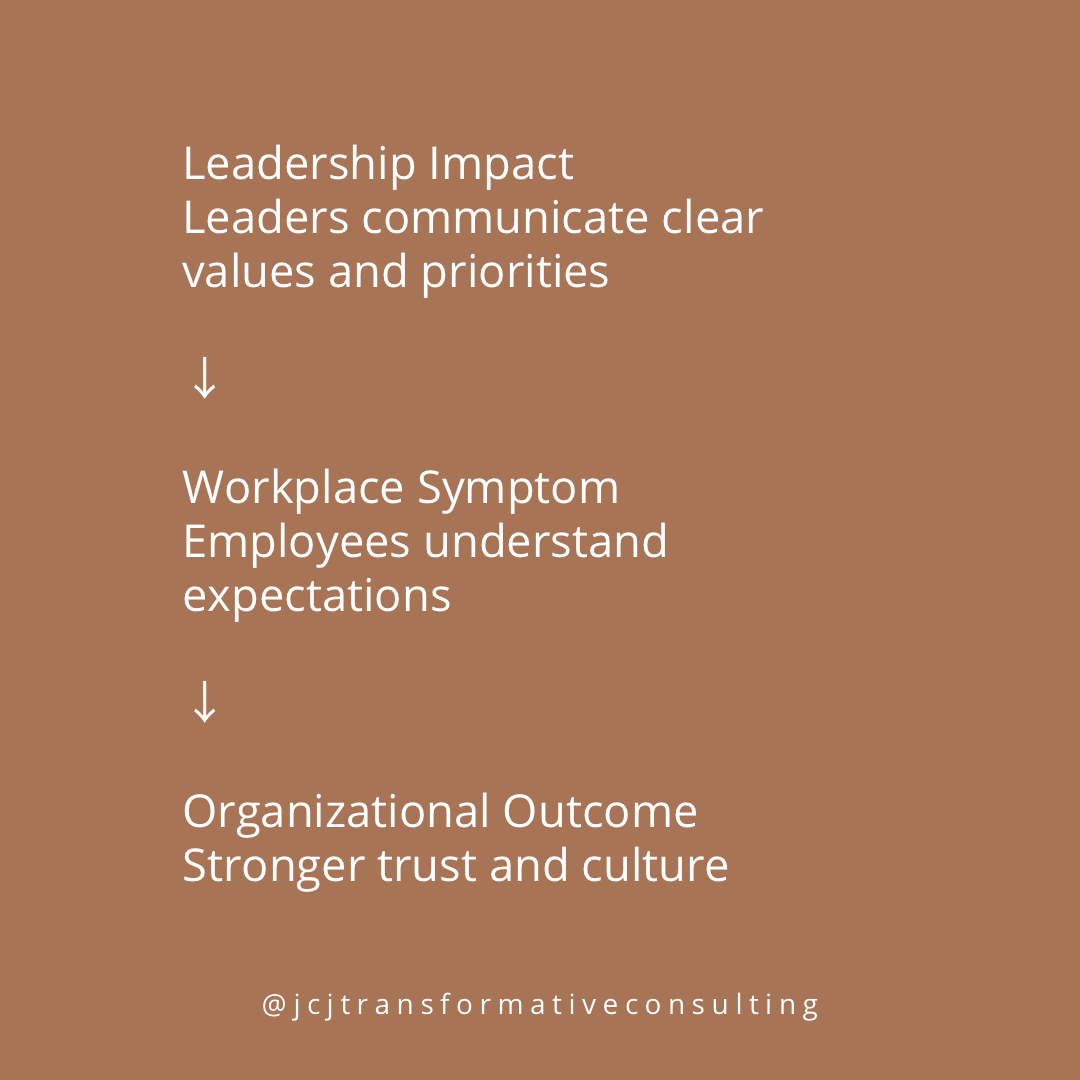
Within the Leadership Systems Impact Map™, this pattern becomes very clear. Leadership behavior creates predictable workplace patterns that ultimately shape organizational performance.
For example:
Leadership Impact: Ignoring employee feedback
Workplace Symptom: Employees stop engaging, speaking up, or offering ideas
Organizational Outcome: Turnover increases, motivation declines, mistakes increase, and goals go unmet
This is not an employee motivation problem. It is a leadership systems problem.
Many employees initially try to contribute. They raise concerns. They offer ideas. They ask questions. They attempt to improve processes…
When those efforts are consistently ignored, leaders often begin to notice something else instead.
Mistakes.
Disengagement.
Silence.
What leaders fail to see is that these behaviors are symptoms of a deeper organizational pattern.
Employees are responding to the environment created by leadership.
When leaders fail to acknowledge employee input, employees begin protecting their energy.
They disengage.
They withdraw.
They do the bare minimum.
Not because they lack work ethic, but because they have learned that their voice does not influence the system.
Now imagine a different leadership response.
What if leaders took the time to truly understand the internal and external motivators of their teams?
What if feedback was acknowledged rather than dismissed?
What if managers offered constructive solutions instead of only negative critiques?
When leaders do this, Employees feel safe.
Safe to contribute.
Safe to challenge ideas.
Safe to innovate.
Psychological safety is one of the most important drivers of innovation, collaboration, and long-term organizational success.
Businesses do not thrive because leaders demand results.
They thrive because leaders create environments where people feel empowered to produce them.
Effective leadership is not just about directing work. It is about understanding your people.
Be the leader who doesn’t just command and demand.
Be the leader who listens.
Because when employees feel heard, organizations perform better.
⸻
This concept is part of the Leadership Systems Impact Map™, a diagnostic tool within the JCJ Transformative Leadership Method™, developed by JCJ Transformative Consulting to help organizations identify hidden leadership patterns that impact engagement, culture, and performance.